Showing posts with label People and Quotes. Show all posts

Sunday, April 6, 2008

David Suzuki, Air, and Intelligence

David Suzuki talking about air and alveoli
March 12, 2008 -- 11th Annual Commonwealth Lecture

Our lungs are made up of about 300 million capsules, or alveoli, and they are clustered around an alveolar stem like grapes. We have lots of these clusters in our lungs and we need them all to provide the surface area needed to come into contact with the air. If you flatten the alveoli of our lungs out into two dimensions, they would cover a tennis court. That is about how much surface area is wrinkled up in our lungs. Each alveolus is lined by a surfactant that reduces surface tension so that the air sticks to it. Immediately carbon dioxide rushes out of our bodies, oxygen and whatever else is in the air rushes in, and haemoglobin molecules in red blood cells grab on to the oxygen so that each beat of our heart can transfer that oxygen to every part of our bodies. And when you exhale you do not exhale all the air in your lungs. If you did that your lungs would collapse. About half of the air stays in your lungs even when you exhale.

The point I am trying to make is that you cannot draw a line that marks where the air ends and I begin. There is no line. The air is stuck to us and circulating through our bodies. We are air. It is a part of us and it is in us…

We think we are an intelligent creature, but what intelligent creature, knowing the role that air plays in our lives keeping us alive and connecting us to the past and into the future, would then proceed to use air as a garbage can and refuse to pay for putting carbon and all our pollutants into the atmosphere? We have much to reflect on the way that we use this sacred substance. It hurts me when I see young couples walking with a baby in a stroller and the baby’s nose is right at the level of the exhaust pipes of our cars. You might as well put a hose on the exhaust pipe and pump that stuff right into the baby’s body. Why are 15% of children in Canada now suffering with asthma? We are using the air as a toxic dump. We are air. Whatever we do to the air we do to ourselves.

Sunday, September 30, 2007

Avoiding Collapse in Modern Civilization

THE NATURE OF THE NEW WORLD
October 2, 2007 -- By Lester R. Brown, Earth Policy Institute

Plan B 2.0 Book Byte:

We recently entered a new century, but we are also entering a new world, one where the collisions between our demands and the earth’s capacity to satisfy them are becoming daily events. It may be another crop-withering heat wave, another village abandoned because of invading sand dunes, or another aquifer pumped dry. If we do not act quickly to reverse the trends, these seemingly isolated events will occur more and more frequently, accumulating and combining to determine our future.

Resources that accumulated over eons of geological time are being consumed in a single human lifespan. We are crossing natural thresholds that we cannot see and violating deadlines that we do not recognize. These deadlines, determined by nature, are not politically negotiable.

Nature has many thresholds that we discover only when it is too late. In our fast-forward world, we learn that we have crossed them only after the fact, leaving little time to adjust. For example, when we exceed the sustainable catch of a fishery, the stocks begin to shrink. Once this threshold is crossed, we have a limited time in which to back off and lighten the catch. If we fail to meet this deadline, breeding populations shrink to where the fishery is no longer viable, and it collapses.

We know from earlier civilizations that the lead indicators of economic decline were environmental, not economic. The trees went first, then the soil, and finally the civilization itself. To archeologists, the sequence is all too familiar.

Our situation today is far more challenging because in addition to shrinking forests and eroding soils, we must deal with falling water tables, more frequent crop-withering heat waves, collapsing fisheries, expanding deserts, deteriorating rangelands, dying coral reefs, melting glaciers, rising seas, more-powerful storms, disappearing species, and, soon, shrinking oil supplies. Although these ecologically destructive trends have been evident for some time, and some have been reversed at the national level, not one has been reversed at the global level.

The bottom line is that the world is in what ecologists call an “overshoot-and-collapse” mode. Demand has exceeded the sustainable yield of natural systems at the local level countless times in the past. Now, for the first time, it is doing so at the global level. Forests are shrinking for the world as a whole. Fishery collapses are widespread. Grasslands are deteriorating on every continent. Water tables are falling in many countries. Carbon dioxide (CO2) emissions exceed CO2 sequestration.

In 2002, a team of scientists led by Mathis Wackernagel, who now heads the Global Footprint Network, concluded that humanity’s collective demands first surpassed the earth’s regenerative capacity around 1980. Their study, published by the U.S. National Academy of Sciences, estimated that global demands in 1999 exceeded that capacity by 20 percent. The gap, growing by 1 percent or so a year, is now much wider. We are meeting current demands by consuming the earth’s natural assets, setting the stage for decline and collapse.

In a rather ingenious approach to calculating the human physical presence on the planet, Paul MacCready, the founder and Chairman of AeroVironment and designer of the first solar-powered aircraft, has calculated the weight of all vertebrates on the land and in the air. He notes that when agriculture began, humans, their livestock, and pets together accounted for less than 0.1 percent of the total. Today, he estimates, this group accounts for 98 percent of the earth’s total vertebrate biomass, leaving only 2 percent for the wild portion, the latter including all the deer, wildebeests, elephants, great cats, birds, small mammals, and so forth.

Ecologists are intimately familiar with the overshoot-and-collapse phenomenon. One of their favorite examples began in 1944, when the Coast Guard introduced 29 reindeer on remote St. Matthew Island in the Bering Sea to serve as the backup food source for the 19 men operating a station there. After World War II ended a year later, the base was closed and the men left the island. When U.S. Fish and Wildlife Service biologist David Kline visited St. Matthew in 1957, he discovered a thriving population of 1,350 reindeer feeding on the thick mat of lichen that covered the 332-square-kilometer (128-square-mile) island. In the absence of any predators, the population was exploding. By 1963, it had reached 6,000. He returned to St. Matthew in 1966 and discovered an island strewn with reindeer skeletons and not much lichen. Only 42 of the reindeer survived: 41 females and 1 not entirely healthy male. There were no fawns. By 1980 or so, the remaining reindeer had died off.

Like the deer on St. Matthew Island, we too are overconsuming our natural resources. Overshoot leads sometimes to decline and sometimes to a complete collapse. It is not always clear which it will be. In the former, a remnant of the population or economic activity survives in a resource-depleted environment. For example, as the environmental resource base of Easter Island in the South Pacific deteriorated, its population declined from a peak of 20,000 several centuries ago to today’s population of fewer than 4,000. In contrast, the 500-year-old Norse settlement in Greenland collapsed during the 1400s, disappearing entirely in the face of environmental adversity.

Even as the global population is climbing and the economy’s environmental support systems are deteriorating, the world is pumping oil with reckless abandon. Leading geologists now think oil production may soon peak and turn downward. Although no one knows exactly when oil production will peak, supply is already lagging behind demand, driving prices upward.

Faced with a seemingly insatiable demand for automotive fuel, farmers will want to clear more and more of the remaining tropical forests to produce sugarcane, oil palms, and other high-yielding biofuel crops. Already, billions of dollars of private capital are moving into this effort. In effect, the rising price of oil is generating a massive new threat to the earth’s biological diversity.

As the demand for farm commodities climbs, it is shifting the focus of international trade concerns from the traditional goal of assured access to markets to one of assured access to supplies. Countries heavily dependent on imported grain for food are beginning to worry that buyers for fuel distilleries may outbid them for supplies. As oil security deteriorates, so, too, will food security.

As the role of oil recedes, the process of globalization will be reversed in fundamental ways. As the world turned to oil during the last century, the energy economy became increasingly globalized, with the world depending heavily on a handful of countries in the Middle East for energy supplies. Now as the world turns to wind, solar cells, and geothermal energy in this century, we are witnessing the localization of the world energy economy.

The world is facing the emergence of a geopolitics of scarcity, which is already highly visible in the efforts by China, India, and other developing countries to ensure their access to oil supplies. In the future, the issue will be who gets access to not only Middle Eastern oil but also Brazilian ethanol and North American grain. Pressures on land and water resources, already excessive in most of the world, will intensify further as the demand for biofuels climbs. This geopolitics of scarcity is an early manifestation of civilization in an overshoot-and-collapse mode, much like the one that emerged among the Mayan cities competing for food in that civilization’s waning years.

You do not need to be an ecologist to see that if recent environmental trends continue, the global economy eventually will come crashing down. It is not knowledge that we lack. At issue is whether national governments can stabilize population and restructure the economy before time runs out.


In addition, here is a synopsis of Jared Diamond's book entitled Collapse:

Diamond lists eight factors which have historically contributed to the collapse of past societies:

1. Deforestation and habitat destruction
2. Soil problems (erosion, salinization, and soil fertility losses)
3. Water management problems
4. Overhunting
5. Overfishing
6. Effects of introduced species on native species
7. Human population growth
8. Increased per-capita impact of people

Further he says four new factors may contribute to the weakening and collapse of present and future societies:

1. Human-caused climate change
2. Buildup of toxic chemicals in the environment
3. Energy shortages
4. Full human utilization of the Earth’s photosynthetic capacity

Tuesday, May 22, 2007

Lead or Step Aside, EPA

Excerpt from:
Lead or Step Aside, EPA: States Can't Wait on Global Warming
May 21, 2007 -- By Arnold Schwarzenegger and Jodi Rell, The Washington Post via Economist's View

It's bad enough that the federal government has yet to take the threat of global warming seriously, but it borders on malfeasance for it to block the efforts of states such as California and Connecticut that are trying to protect the public's health and welfare.

California, Connecticut and 10 other states are poised to enact tailpipe emissions standards -- tougher than existing federal requirements -- that would cut greenhouse gas emissions from cars, light trucks and sport-utility vehicles by 392 million metric tons by the year 2020, the equivalent to taking 74 million of today's cars off the road for an entire year.

Since transportation accounts for one-third of America's greenhouse gas emissions, enacting these standards would be a huge step forward... Yet for the past 16 months, the Environmental Protection Agency has refused to give us permission to do so.

Even after the Supreme Court ruled in our favor last month, the federal government continues to stand in our way.

Another discouraging sign came just last week, when President Bush issued an executive order to give federal agencies until the end of 2008 to continue studying the threat of greenhouse gas emissions and determine what can be done about them.

To us, that again sounds like more of the same inaction and denial, and it is unconscionable. ... By continuing to stonewall California's request, the federal government is blocking the will of tens of millions of people in California, Connecticut and other states who want their government to take real action on global warming.

The EPA is finally holding the first of two hearings on the waiver request tomorrow... But we are far from convinced that the agency intends to follow the law and grant us our waiver.

If it fails to do so, we have an obligation to take legal action and settle this issue once and for all. ... The federal government should not stand in the way of dealing with the most serious environmental challenge facing the world. ...

California, Connecticut and a host of like-minded states are proving that you can protect the environment and the economy simultaneously. It's high time the federal government becomes our partner or gets out of the way.

Sunday, May 20, 2007

The Road To Clean Energy Starts Here, by Jeffrey D. Sachs

The Road to Clean Energy Starts Here
May 2007 Issue -- By Jeffrey D. Sachs, Scientific American

Realizing crucial energy technologies will take more than just research and development

The key to solving the climate change crisis is technology. To accommodate the economic aspirations of the more than five billion people in the developing countries, the size of the world economy should increase by a factor of four to six by 2050
; at the same time, global emissions of greenhouse gases will have to remain steady or decline to prevent dangerous changes to the climate. After 2050, emissions will have to drop further, nearly to zero, for greenhouse gas concentrations to stabilize.

The overarching challenge is to make that transition at minimum cost and without economic disruption. Energy-saving technologies will play a pivotal role. Buildings can save energy at low capital cost, and often net overall savings, through improved insulation, efficient illumination and the use of heat pumps rather than home furnaces. Automobiles could, over time, reach 100 miles per gallon by a shift to plug-in hybrids, better batteries, lighter frames and other strategies. Of course, technologies such as heat pumps and plug-in hybrids partly reduce direct emissions by shifting from on-site combustion to electricity, so that low-emission power plants become paramount.

Low-emission electricity generation will be achieved in part through niche sources such as wind and biofuels. Larger-scale solutions will come from nuclear and solar power. Yet clean coal will be essential. New combustion techniques, combined with carbon capture and sequestration (CCS), offer the prospect of low- or zero-emission coal-fired thermal plants. The incremental costs of ccs may well be as low as one to three cents per kilowatt-hour.

All these technologies are achievable. Some will impose real added costs; others will pay for themselves as lower energy bills offset higher capital outlays. Some estimates suggest that, as of 2050, the world will have to negate around 30 billion tons of carbon dioxide emissions a year at a cost of roughly $25 per ton, or $750 billion annually. But with a world economy by then of perhaps $200 trillion, the cost would be well under 1 percent of world income and perhaps under 0.5 percent, a true bargain compared with the costs of inaction.

Achieving these technological solutions on a large scale, however, will require an aggressive global technology policy. First, there will have to be market incentives to avoid emissions, in the form of either tradable permits or levies. A reasonable levy might be $25 per ton of emitted carbon dioxide, introduced gradually over the next 10 to 20 years. Second, there will have to be ample government support for rapid technological change. Patents can help spur private market research and development (R&D), but public funding is required for basic science as well as for the public demonstration and the global diffusion of new technologies. In sum, we need a strategy sometimes described as RDD&D.

In the past two years, the Earth Institute at Columbia University has hosted a Global Roundtable on Climate Change, involving leading corporations from around the world. These companies, including many of the largest power producers, are ready to reduce carbon emissions. They know that CCS must be a high priority. A new Global Roundtable Task Force on CCS seeks to promote the required RDD&D. Fortunately, the European Union has already pledged to build at least a dozen CCS demonstration projects in Europe by 2015. But we will also need such centers in the U.S., China, India, Australia, Indonesia and other highly significant coal-power producers. In the low-income countries, this will require a few billion dollars; that is where the RDD&D investments of the high-income countries will be essential. The CCS Task Force aims to break ground on one or more demonstration plants by 2010 in every major coal region. By 2015 this crucial technology can be proved and added to the bid to avert climate disaster. This model of RDD&D won't stop there. Harnessing technology to achieve sustainable energy will involve much of the global economy for decades.

Wednesday, May 16, 2007

We Need to Bring Climate Idealism Down to Earth

Excerpts from:
We Need to Bring Climate Idealism Down to Earth
April 30, 2007 -- By Larry Summers, commentary, Financial Times via Economist's View

With the accumulation of scientific evidence and its persuasive presentation to the public, the global warming debate has reached a new stage. ...

The real question for debate is not whether something should be done – that debate is over among the rational. The crucial question now is what should be done so as to leave our descendants with the highest possible quality of life. ...

There is a very real danger that the global cap and trade approach ... enshrined in the Kyoto protocol – now favoured by most European governments – could be ineffective or even counterproductive by substituting for more realistic approaches to the problem.
Kyoto is now the only game in town for those who do not want to be ostriches with respect to global climate change and so one has to hope for its ultimate success. But it is surely useful to try to be clear about the potential pitfalls...

First, the Kyoto approach depends on the questionable premise that nations will, in fact, be bound by binding targets or penalties for not meeting them. It is instructive in this regard to consider the history of the Maastricht Treaty within the European Union. It addressed fiscal targets ... within a group of countries that had already achieved a high degree of cohesion. It broke down almost immediately when it looked like the targets would not be binding for big countries, with the goals abandoned and no payment of even the modest penalties.

There is to date little evidence that Kyoto is driving behaviour. Whatever evidence there is of impressive emissions reductions comes from countries such as the UK, Germany and the former communist states, where coal use was being phased out for other reasons. The limited impact of Kyoto is evinced by the fact that carbon permits are now selling in the range of a negligible one euro a ton.

Second, carbon markets are invitations to engage in pork-barrel corporate subsidy politics on a massive scale. If greenhouse gas emissions are to be substantially reduced, the value of the associated emissions rights will be in the tens of billions of dollars. While in principle emission permits could be auctioned, in practice they are always allocated administratively. ...[In addition]..., the clean development mechanism has resulted in substantial payments for emissions reductions that would have occurred anyway or could have been achieved at negligible cost. There is even reason to think that certain industrial gas emissions may have been increased so that credit could be claimed for their abatement.

Third, the most serious problem with the Kyoto framework is that it is unlikely to generate substantial changes in developing country policies. ...[D]eveloping country policymakers are not likely to accept binding targets ... that fall way short on a per-capita basis of emissions levels in the industrial world. ...

The truth about climate change policy is that developing countries are where most of the future action has to be. They will account for 75 per cent of the increase in emissions over the next quarter century and are now making the infrastructure investments that will shape their future economies. ... The 1997 vote cast by all the Democrats in the Senate suggests that approaches that do not involve the developing world are unlikely to command political support in at least some parts of the industrialised world.

Perhaps these problems and others, like the difficulty of establishing emissions targets given the magnitude of economic uncertainties, can be overcome with goodwill and extensive thought. But next month I shall suggest approaches that, while less dramatic in their immediate claims for emissions reductions, may over time provide a more secure foundation for the progress that the world must have.

Tuesday, May 1, 2007

Designing Cities For People

Designing Cities For People
May 1, 2007 -- By Lester R. Brown, Earth Policy Institute

As I was being driven through Tel Aviv from my hotel to a conference center a few years ago, I could not help but note the overwhelming presence of cars and parking lots. Tel Aviv, expanding from a small settlement a half-century ago to a city of some 3 million today, evolved during the automobile era. It occurred to me that the ratio of parks to parking lots may be the best single indicator of the livability of a city--whether a city is designed for people or for cars.

The world's cities are in trouble. In Mexico City, Tehran, Bangkok, Shanghai, and hundreds of other cities, the quality of daily life is deteriorating. Breathing the air in some cities is equivalent to smoking two packs of cigarettes per day. In the United States, the number of hours commuters spend sitting in traffic going nowhere climbs higher each year.

In response to these conditions, we are seeing the emergence of a new urbanism. One of the most remarkable modern urban transformations has occurred in Bogotá, Colombia, where Enrique Peñalosa served as Mayor for three years, beginning in 1998. When he took office he did not ask how life could be improved for the 30 percent who owned cars; he wanted to know what could be done for the 70 percent--the majority--who did not own cars.


Peñalosa realized that a city that is a pleasant environment for children and the elderly would work for everyone. In just a few years, he transformed the quality of urban life with his vision of a city designed for people. Under his leadership, the city banned the parking of cars on sidewalks, created or renovated 1,200 parks, introduced a highly successful bus-based rapid transit system, built hundreds of kilometers of bicycle paths and pedestrian streets, reduced rush hour traffic by 40 percent, planted 100,000 trees, and involved local citizens directly in the improvement of their neighborhoods. In doing this, he created a sense of civic pride among the city's 8 million residents, making the streets of Bogotá in strife-torn Colombia safer than those in Washington, D.C.

Enrique Peñalosa observes that "high quality public pedestrian space in general and parks in particular are evidence of a true democracy at work." He further observes: "Parks and public space are also important to a democratic society because they are the only places where people meet as equals. In a city, parks are as essential to the physical and emotional health of a city as the water supply." He notes this is not obvious from most city budgets, where parks are deemed a luxury. By contrast, roads, the public space for cars, receive infinitely more resources and less budget cuts than parks, the public space for children. Why, he asks, are the public spaces for cars deemed more important than the public spaces for children?

Now government planners everywhere are experimenting, seeking ways to design cities for people not cars. Cars promise mobility, and they provide it in a largely rural setting. But in an urbanizing world there is an inherent conflict between the automobile and the city. After a point, as their numbers multiply, automobiles provide not mobility but immobility. Congestion also takes a direct economic toll in rising costs in time and gasoline. And urban air pollution, often from automobiles, claims millions of lives.

Another cost of cities that are devoted to cars is a psychological one, a deprivation of contact with the natural world--an "asphalt complex." There is a growing body of evidence that there is an innate human need for contact with nature. Both ecologists and psychologists have been aware of this for some time. Ecologists, led by Harvard University biologist E.O. Wilson, have formulated the "biophilia hypothesis," which argues that those who are deprived of contact with nature suffer psychologically and that this deprivation leads to a measurable decline in well-being.

Throughout the modern era, budget allocations for transportation in most countries--and in the United States, in particular--have been heavily biased toward the construction and maintenance of highways and streets. Creating more livable cities and the mobility that people desire depends on reallocating budgets to emphasize the development of rail- or bus-based public transport and bicycle support facilities.

The exciting news is that there are signs of change, daily indications of an interest in redesigning cities for people, not for cars. One encouraging trend comes from the United States. Public transit ridership nationwide rising by 2.1 percent a year since 1996 indicates that people are gradually abandoning their cars for buses, subways, and light rail. Rising gasoline prices are encouraging still more commuters to abandon their cars and take the bus or subway or get on a bicycle.

When Beijing decided to promote an automobile-centered transportation system, a group of eminent scientists in China protested. They pointed out that the country does not have enough land to accommodate the automobile and to feed its people. What is true for China is also true for India and dozens of other densely populated developing countries.

Some cities are far better at planning their growth than others. They plan transport systems that provide mobility, clean air, and exercise--a sharp contrast to cities that offer congestion, unhealthy air, and little opportunity for exercise. When 95 percent of a city's workers depend on the automobile for commuting, as in Atlanta, Georgia, the city is in trouble.

By contrast, in Amsterdam only 40 percent of workers commute by car; 35 percent bike or walk, while 25 percent use public transit. Copenhagen's commuting patterns are almost identical to Amsterdam's. In Paris, just under half of commuters rely on cars. Even though these European cities are older, with narrow streets, they have far less congestion than Atlanta.

Not surprisingly, car-dependent cities have more congestion and less mobility than those that offer a wider range of commuting options. The very vehicle whose great promise was personal mobility is in fact virtually immobilizing entire urban populations, making it difficult for rich and poor alike to move about.

Existing long-term transportation strategies in many developing countries assume that everyone will one day be able to own a car. Unfortunately, given the constraints of land available for cars, not to mention those imposed by oil reserves, this is simply not realistic. These countries will provide more mobility if they support public transportation and the bicycle.

Friday, April 20, 2007

Cold Turkey, by Kurt Vonnegut (1922-2007)

Excerpt from:
Cold Turkey
May 10, 2004 -- By Kurt Vonnegut

I am of course notoriously hooked on cigarettes. I keep hoping the things will kill me. A fire at one end and a fool at the other.

But I’ll tell you one thing: I once had a high that not even crack cocaine could match. That was when I got my first driver’s license! Look out, world, here comes Kurt Vonnegut.

And my car back then, a Studebaker, as I recall, was powered, as are almost all means of transportation and other machinery today, and electric power plants and furnaces, by the most abused and addictive and destructive drugs of all: fossil fuels.

When you got here, even when I got here, the industrialized world was already hopelessly hooked on fossil fuels, and very soon now there won’t be any more of those. Cold turkey.

Can I tell you the truth? I mean this isn’t like TV news, is it?

Here’s what I think the truth is: We are all addicts of fossil fuels in a state of denial, about to face cold turkey.

And like so many addicts about to face cold turkey, our leaders are now committing violent crimes to get what little is left of what we’re hooked on.

Wednesday, April 18, 2007

What Economists Can Learn From Evolutionary Theorists

What Economists Can Learn From Evolutionary Theorists
November 1996 -- By Paul Krugman
(From a talk given to the European Association for Evolutionary Political Economy)

To read the real thing in evolution - to read, say, John Maynard Smith's Evolution and the Theory of Games, or William Hamilton's new book of collected papers, Narrow Roads in Gene Land, is a startling experience to someone whose previous idea of evolution comes from magazine articles and popular books. The field does not look at all like the stories. What it does look like, to a remarkable degree, is - dare I say it? - neoclassical economics. And it offers very little comfort to those who want a refuge from the harsh discipline of maximization and equilibrium.[...]

Personally, I consider myself a proud neoclassicist. By this I clearly don't mean that I believe in perfect competition all the way. What I mean is that I prefer, when I can, to make sense of the world using models in which individuals maximize and the interaction of these individuals can be summarized by some concept of equilibrium. The reason I like that kind of model is not that I believe it to be literally true, but that I am intensely aware of the power of maximization-and-equilibrium to organize one's thinking - and I have seen the propensity of those who try to do economics without those organizing devices to produce sheer nonsense when they imagine they are freeing themselves from some confining orthodoxy.

Monday, April 16, 2007

Gore, Gandhi, and Dioum

Al Gore at TED

March, 2008


Here is an excellent presentation on issues pertaining to the new environmental movement--global climatic disruption and resource constraints (in comparison to the previous environmental movement--biodiversity, toxins, air/water quality, and population). In the past, I have been skeptical towards Al Gore for a few reasons. The most prevalent being that he flies around the world, after leaving one of his mansions, to tell the general public to reduce emissions.


"You must be the change you wish to see in the world."

-Mohandas Gandhi


However, I am beginning to think less about his vanity and more about his ability to promote ideas in a compelling way.


"For in the end, we will conserve only what we love. We will love only what we understand. We will understand only what we are taught."

-Baba Dioum


He is one of many voices that need to be listened to as humanity attempts to reduce the tragedy of the commons and improve the living conditions for all of life.


Tuesday, April 3, 2007

Do We Tax Energy Enough?

Here is the link with audio and video of this great discussion as well as related papers by Hassett and Parry. I would recommend signing up for a free subscription to Resources by Resources for the Future as well as reading Greg Mankiw's blog. Below is an introduction to the discussion.

Do We Tax Energy Enough?
March 29, 2007 -- American Enterprise Institute For Public Policy Research

What are the advantages and disadvantages of carbon and gasoline taxes? Ian W. H. Parry of Resources for the Future and AEI’s Kenneth P. Green, Kevin A. Hassett, and N. Gregory Mankiw will examine the pros and cons of carbon and gasoline taxes, discuss possible levels at which they could be set, and compare taxation to regulation as an alternative way to address environmental concerns.

Monday, March 26, 2007

Al Gore Excerpt With House & Senate Committee: March 21, 2007

"I promise you--I say this to each of you as individuals--I promise you a day will come when our children and grandchildren will look back and they'll ask one of two questions. Either they will ask, "What in God's name were they doing? Didn't they see the evidence? Didn't they realize that four times in 15 years the entire scientific community of this world issued unanimous reports calling upon them to act. What was wrong with them? Were they too blinded and numb with the busyness of political life or daily life to take a deep breath and look at the reality of what we're facing? Did they think it was perfectly alright to keep dumping 70 million tons every single day of global warming pollution into this earth's atmosphere? Did they think all the scientists were wrong? What were they thinking? Or, they'll ask another question. They may look back and they'll say, "How did they find the uncommon moral courage to rise above politics and redeem the promise of American democracy?" And do what some said was impossible and shake things up. And tell the special interest, "Okay, we've heard you and we're going to do the best we can to take your considerations into account, but we're going to do what's right." I'm going to do my part to make sure that you have all the support that I and lots of other folks can muster for you in both parties. When you do the right thing."
- Al Gore, March 21, 2007


Check out another nice post from Grist

Wednesday, February 7, 2007

Senators Boxer & Inhofe Discuss Climate Change On Larry King

Interesting debate between two very different people.


Sens. Barbara Boxer and James Inhofe, chairwoman and ranking minority member of the Environment & Public Works Committee respectively, discuss climate change on Larry King Live.

Related Posts: James Inhofe, Senator Chafee Debate

Thursday, February 1, 2007

Make Green Pay, Davos 2007: CNBC video

Make Green Pay is a discussion coordinated by CNBC at this years Davos meetings. The link provided will take you to the video for the entire program. The topics discussed are as follows:

MOTION 1: Nuclear energy and cleaner coal are the only workable alternatives to oil

James Rogers, President and Chief Executive Officer of Duke Energy argues for the motion that nuclear energy and cleaner coal are the only workable alternatives to oil. Today’s needs can only be met with today’s resources he says. Mr Rogers sees emission-free nuclear and advanced-coal technologies as the energy workhorses for the short-to medium term. Vinod Khosla, Founder and Partner of Khosla Ventures argues against the motion puts forward the case against the motion. He focuses on the hidden costs of nuclear and coal – the clean-up costs. Factor those in, he insists, and clean renewables start to look a whole lot more competitive.


MOTION 2: Markets are superior to regulation in leading corporations towards greener operations

In the board rooms and in the corridors of power there is increasing acknowledgement that the way in which we consume energy is damaging the earth. For most corporations though, changing attitudes are yet to translate into radically different practices. Reverend Nicholas Frances, Chief Executive Officer of Easy Being Green, puts forward the case for motion 2; that markets are the most effective influence on company behaviour. He says that a government’s ability to regulate will always lag the entrepreneur’s talent to innovate. Professor Daniel Esty, Hill House Professor at Yale University puts forward an opposing view. Professor Esty argues that business must be motivated to find solutions. Regulation, he points out, gives business the stability required for the risks associated with policy changes.


MOTION 3: A global carbon tax would do more harm than good

Professor Jose Goldemberg of Sao Paulo University reminds us that the developing world is unlikely agree to sacrifice economic development for an environmental agenda. He not only says that a global tax would do more harm than good but that to even aim for one would be unrealistic. Sir Nicholas Stern of the UK treasury and author of the Stern review stands against the motion. According to Sir Nicholas, companies must face with the full social cost of their actions and that, in economic terms, a common global carbon price would be the most efficient way of achieving this.

Monday, June 26, 2006

Bolton vs. Gore

The issue of finite resource allocation to the cause with the highest priority is extremely important in trying to make the world a better place. But what the highest priority is depends on who you ask. Here is the article from this weeks The Economist:

A question of priorities: hunger and disease or climate change?

Two years ago, a Danish environmentalist called Bjorn Lomborg had an idea. We all want to make the world a better place but, given finite resources, we should look for the most cost-effective ways of doing so. He persuaded a bunch of economists, including three Nobel laureates, to draw up a list of priorities. They found that efforts to fight malnutrition and disease would save many lives at modest expense, whereas fighting global warming would cost a colossal amount and yield distant and uncertain rewards.

That conclusion upset a lot of environmentalists. This week, another man who upsets a lot of people embraced it. John Bolton, America's ambassador to the United Nations, said that Mr Lomborg's “Copenhagen Consensus” (see articles) provided a useful way for the world body to get its priorities straight. Too often at the UN, said Mr Bolton, “everything is a priority”. The secretary-general is charged with carrying out 9,000 mandates, he said, and when you have 9,000 priorities you have none.

So, over the weekend, Mr Bolton sat down with UN diplomats from seven other countries, including China and India but no Europeans, to rank 40 ways of tackling ten global crises. The problems addressed were climate change, communicable diseases, war, education, financial instability, governance, malnutrition, migration, clean water and trade barriers.

Given a notional $50 billion, how would the ambassadors spend it to make the world a better place? Their conclusions were strikingly similar to the Copenhagen Consensus. After hearing presentations from experts on each problem, they drew up a list of priorities. The top four were basic health care, better water and sanitation, more schools and better nutrition for children. Averting climate change came last.

The ambassadors thought it wiser to spend money on things they knew would work. Promoting breast-feeding, for example, costs very little and is proven to save lives. It also helps infants grow up stronger and more intelligent, which means they will earn more as adults. Vitamin A supplements cost as little as $1, save lives and stop people from going blind. And so on.

For climate change, the trouble is that though few dispute that it is occurring, no one knows how severe it will be or what damage it will cause. And the proposed solutions are staggeringly expensive. Mr Lomborg reckons that the benefits of implementing the Kyoto protocol would probably outweigh the costs, but not until 2100. This calculation will not please Al Gore. Nipped at the post by George Bush in 2000, Mr Gore calls global warming an “onrushing catastrophe” and argues vigorously that curbing it is the most urgent moral challenge facing mankind.

Mr Lomborg demurs. “We need to realise that there are many inconvenient truths,” he says. But whether he and Mr Bolton can persuade the UN of this remains to be seen. Mark Malloch Brown, the UN's deputy secretary-general, said on June 6th that: “there is currently a perception among many otherwise quite moderate countries that anything the US supports must have a secret agenda...and therefore, put crudely, should be opposed without any real discussion of whether [it makes] sense or not.”

Tuesday, June 20, 2006

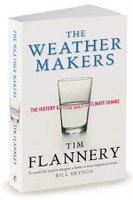
Tim Flannery & Peter Singer

'The Weather Makers: The History and Future Impact of Climate Change' is Tim Flannery's newest book that clearly states the current dilemma of global climate change. Peter Singer writes:

This is the book the world has been waiting for – and needing – for decades. At last, a book that sets out, for the general public, the irrefutable evidence that climate change is already happening, and we need to become very serious about it – fast.

Click here to listen to an interview with Tim Flannery.

Herman E. Daly & Joshua Farley

I recently purchased 'Ecological Economics: Principles and Applications' (2004) by Herman E. Daly and Joshua Farley published by Island Press. Thus far, I have thoroughly enjoyed it; I thought I would share some quotes from the introduction.

French and British university students have formed a Society for Post-Autistic Economics. Their implicit diagnosis is apt, since autism, like conventional economics, is characterized by 'abnormal subjectivity; an acceptance of fantasy rather than reality.' Ecological economics seeks to ground economic thinking in the dual realities and constraints of our biophysical and moral environments. Current 'canonical assumptions' of insatiable wants and infinite resources, leading to growth forever, are simply not founded in reality. Their dire consequences are evident. And that truly is something new under the sun.

...
Ecological economics views the economy as a part of a larger finite system. This means that the traditional goal of macroeconomic policy--unlimited economic growth in the physical dimension--is impossible. Thus, in ecological economics, optimal scale replaces growth as a goal, followed by fair distribution and efficient allocation, in that order. Scale and distribution are basically macroeconomic issues. Hence, in addition to the fiscal and monetary policy tools that dominate the discussion in traditional texts, we will introduce policies that can help the economy reach an optimal scale.

Lester R. Brown

Lester R. Brown is one of those few people who understands complex issues before his contemporaries and can then clearly explain his thoughts to enlighten the rest of us. Here is an excerpt from pg. 5-6 in my favorite book, 'Eco-Economy' by Lester R. Brown (2001):

The gap between economists and ecologists in their perception of the world as the new century begins could not be wider. Economists look at the unprecedented growth of the global economy and of international trade and investment and see a promising future with more of the same. They vote with justifiable pride that the global economy has expanded sevenfold since 1950, raising output from $6 trillion of goods and services to $43 trillion in 2000, boosting living standards to levels not dreamed of before. Ecologists look at this same growth and realize that it is the product of burning vast quantities of artificially cheap fossil fuels, a process that is destabilizing the climate. They look ahead and see more intense heat waves, more destructive storms, melting ice caps, and a rising sea level that will shrink the land area even as population continues to grow. While economists see booming economic indicators, ecologists see an economy that is altering the climate with consequences that no one can foresee.

As the new century gets under way, economists look at grain markets and see the lowest grain prices in two decades--a sure sign that production capacity is outrunning effective demand, that supply constraints are not likely to be an issue for the foreseeable future. Ecologists, meanwhile, see water tables falling key food producing countries, and know that 480 million of the world's 6.1 billion people (now 6.5 billion) are being fed with grain produced by over pumping aquifers. They are worried about the effect of eventual aquifers depletion on food production.

Economists rely on the market to guide their decision-making. They respect the market because it can allocate resources with an efficiency that a central planner can never match (as the Soviets learned at great expense). Ecologists view the market with less reverence because they see a market that is not telling the truth. For example, when buying a gallon of gasoline, customers in effect pay to get the oil out of the ground, refine it into gasoline, and deliver it to the local service station. But they do not pay the health care costs of treating respiratory illness from air pollution or the costs of climate disruption.

Ecologists see the record economic growth of recent decades, but they also see an economy that is increasingly in conflict with its support systems, one that is fast depleting the earth's natural capital, moving the global economy onto an environmental path that will inevitably lead to economic decline. They see the need for a wholesale restructuring of the economy so that it meshes with the ecosystem. They know that a stable relationship between the economy and the earth's ecosystem is essential if economic progress is to be sustained.

We have created an economy that cannot sustain economic progress, an economy that cannot take us where we want to go. Just as Copernicus had to formulate a new astronomical worldview after several decades of celestial observations and mathematical calculations, we too must formulate a new economic worldview based on several decades of environmental observations and analyses.

Although the idea that economics must be integrated into ecology may seem radical to many, evidence is mounting that it is the only approach that reflects reality. When observations no longer support theory, it is time to change the theory--what science historian Thomas Kuhn calls a paradigm shift. If the economy is a subset of the earth's ecosystem, as this book contends, the only formulation of economic policy that will succeed is one that respects the principles of ecology.

The good news is that economists are becoming more ecologically aware, recognizing the inherent dependence of the economy on the earth’s ecosystem. For example, some 2,500 economists--including eight Nobel laureates--have endorsed the introduction of a carbon tax to stabilize climate. More and more economists are looking for ways to get the market to tell the ecological truth. This spreading awareness is evident in the rapid growth of the International Society of Ecological Economics, which has 1,200 members and chapters in Australia/New Zealand, Brazil, Canada, India, Russia, China, and throughout Europe. Its goal is to integrate the thinking of ecologists and economists into a transdiscipline aimed at building a sustainable world.

Geo-Green Patriot Tax

In the June 16th issue of The New York Times, Thomas L. Friedman writes on his hopes for a third party to run in 2008 with a double dividend platform:

What might a Geo-Green third party platform look like?

Its centerpiece would be a $1 a gallon gasoline tax, called "The Patriot Tax," which would be phased in over a year. People earning less than $50,000 a year, and those with unusual driving needs, would get a reduction on their payroll taxes as an offset.

...
The billions of dollars raised by the Patriot Tax would go first to shore up Social Security, second to subsidize clean mass transit in and between every major American city, third to reduce the deficit, and fourth to massively increase energy research by the National Science Foundation and the Energy and Defense Departments' research arms.

Most important, though, the Patriot Tax would increase the price of gasoline to a level that would ensure that many of the most promising alternatives — ethanol, biodiesel, coal gasification, solar energy, nuclear energy and wind — would all be economically competitive with oil and thereby reduce both our dependence on crude and our emissions of greenhouse gases.

WSJ Quote of the Day

In the June 15th 2006 Wall Street Journal, the Morning Report's Quote of the Day addressed the increased risk of certain markets due to the stressed environment and asking the SEC to require full disclosure of increased risk due to environmental concerns.

"Investors have a right to know if a company's buildings are in the path of hurricanes that might be exacerbated by climate change, or if it will face high costs when greenhouse gas emissions are regulated. They need that information to reduce their portfolio risk," said James Coburn, a policy adviser at Ceres, a coalition of environmental groups and investors who collectively manage more than $1 trillion in assets that sent a letter asking the Securities and Exchange Commission to require that companies disclose their financial vulnerability to changes in climate, the New York Times reports.


The article continues on a different page with writings from the New York Times.


Investors worried about the possible financial fallout from greenhouse gas emissions have asked the Securities and Exchange Commission to require that companies disclose their financial vulnerability to changes in climate.

Yesterday, a group of 27 investors who collectively manage more than $1 trillion in assets sent a letter to the S.E.C. chairman, Christopher Cox, asking that financial risks linked to climate change issues be included as part of routine corporate financial reports.

The letter, whose signers included several state officials, including the New York Comptroller Alan G. Hevesi, defines risk broadly.

"Investors have a right to know if a company's buildings are in the path of hurricanes that might be exacerbated by climate change, or if it will face high costs when greenhouse gas emissions are regulated," said James Coburn, a policy adviser at Ceres, a coalition of investors and environmental groups that sent the letter. "They need that information to reduce their portfolio risk."

Just as important, Mr. Coburn said, companies that are forced to quantify and disclose their vulnerabilities are far more likely to address them. "What is measured is managed," he said.

Mr. Coburn said Ceres faxed the letter to Mr. Cox, and sent e-mail copies to several staff members. It has also mailed copies to the chairman and commissioners.

A spokesman for the S.E.C., John Heine, said the agency had no comment at this time.

Richard Dawkins

On June 6th 2006, Nicholas Wade of The New York Times wrote an interesting article on a new book about Dr. Richard Dawkins of the University of Oxford. I am sure there is plenty to write about the opinions and philosophies of the foremost Darwinist over the past 20 years. The title of this book of essays is "Richard Dawkins: How a Scientist Changed the Way We Think". Here is the second half of the article that begins by discussing his first book, "The Selfish Gene":

Dr. Dawkins's starting point was the idea that the gene, not the individual, is the basic unit on which natural selection acts. The gene's behavior is most easily understood by assuming its interest is to get itself replicated as much as possible — hence the "selfish" gene of the title.

But genes cannot exist independently. They must cooperate with many other genes in creating vehicles (like ourselves) that are good at getting them replicated.

The primary goal for Dr. Dawkins was to explain the recent work of other biologists, notably George Williams's critique of group selection, William D. Hamilton's theory of kin selection, John Maynard Smith's concept of evolutionarily stable strategies, and Robert L. Trivers's analysis of the intrafamily competition between siblings and between parent and child.

Dr. Hamilton, who died in 2000, is now regarded as one of the most important evolutionary biologists since Darwin. But 30 years ago he was almost unknown, even to specialists, because his insights were expressed in mathematical form.

Dr. Hamilton's chief insight was the solution of a problem that Darwin himself had spotted as potentially fatal for his theory, that of altruistic individuals who sacrifice their lives for the good of their colony, hive or kin. How can a genetic basis for altruism ever evolve, given that an altruist's genes must surely become less common as he diverts resources from helping his own progeny to fostering the survival of others?

Dr. Hamilton showed that it all makes sense when one considers that an individual is not the only carrier of his genes. The very same genes, or at least half of them, are carried by each of an individual's siblings, with lesser fractions shared by uncles, aunts, nephews and nieces. For an altruist to help these relatives survive and propagate their genes is almost as good as propagating his own genes. Once the gene is considered as the unit of selection, it is clear how genes for altruism can spread.

Dr. Dawkins fastened on the idea of the gene as the focus of natural selection and set out in "The Selfish Gene" to restate the new work of Dr. Hamilton, Dr. Trivers and Maynard Smith in these terms. "What he does," the biologist John Krebs writes in this anthology, "is to reanalyze or reinterpret the findings of others with such excoriating rigor, depth and clarity that he uncovers new ideas and ways of thinking."

Dr. Grafen, a biologist and the co-editor, says the exposition of these ideas in the Dawkins book "established a single conceptual framework within which old and new ideas in adaptionism could be understood."

Edward O. Wilson drew on many of the same ideas in his book "Sociobiology," published in 1975, a year before "The Selfish Gene." But "Sociobiology" was a work of synthesis, showing how social behavior across the realm of animal species could be understood in evolutionary terms, whereas Dr. Dawkins's approach was more theoretical. "The Selfish Gene" is "an attempt to convey the underlying logic of a particular type of reasoning, rather than representing a broad overview," Ullica Segerstrale writes in a comparison of the two books.

Despite a fond appreciation in this volume from his local cleric, the bishop of Oxford, Dr. Dawkins has become known to a wider public as a rationalist and a vocal atheist with little time for forms of religious obscurantism like creationism. Mr. Pullman, whose science fiction attacks traditional notions of God, hails Dr. Dawkins as "a ferocious and implacable opponent of those who water the dark roots of superstition."

Though composed of essays that are mostly by Dr. Dawkins's admirers, this book presents a vivid picture of how one man, by force of rigorous analysis and clear writing, taught a generation of biologists how to think about evolution.


On September 25th of this year, "The God Delusion" by Dr. Richard Dawkins will be released.